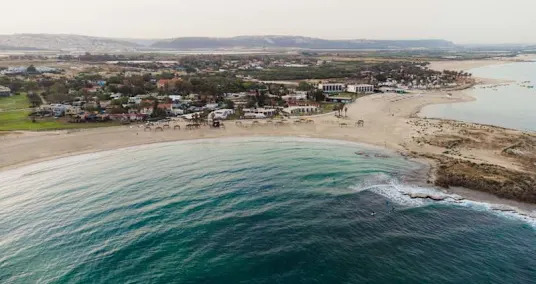
The discovery was made in an ancient shipwreck in the Dor Lagoon near the Carmel Coast, where archaeologists recovered nine pieces of unprocessed iron known as “blooms.”
Researchers from the University of Haifa said Wednesday that an underwater excavation off Israel’s northern Mediterranean coast uncovered what they described as the earliest known cargo of raw iron transported by ship, dating back around 2,600 years, Xinhua reported.
The discovery was made in an ancient shipwreck in the Dor Lagoon near the Carmel Coast, where archaeologists recovered nine pieces of unprocessed iron known as “blooms.” According to the university, the find provides direct evidence of how iron was transported in its earliest commercial stages.
The material was preserved in its original form, having solidified directly in a smelting furnace without undergoing forging or further refinement. Researchers said this distinguishes the cargo from later iron artifacts that typically show signs of shaping or tool-making.
Unlike copper and bronze, which could be melted into liquid form in ancient production processes, iron was heated with charcoal to produce a solid, porous mass. That mass was generally hammered to remove impurities and create denser material suitable for tools and implements.
The recovered blooms showed no indication of that secondary processing stage, suggesting they were transported immediately after production.

Earliest iron shipment discovered in ancient Mediterranean wreck
To determine the age and condition of the cargo, researchers conducted microscopic and chemical analyses.
Radiocarbon dating was also carried out on charred wood embedded in one of the pieces, helping confirm the timeline of the shipment. The findings were published in the journal Heritage Science.
Researchers said the cargo indicates that iron was being moved in raw form from production sites to other locations for further processing, pointing to a level of specialization in ancient manufacturing and trade networks in the Mediterranean.
The University of Haifa said the discovery provides new insight into early iron production and distribution practices in the region.
LATEST POSTS
- 1
 Meet the Artemis crew in NASA's first astronaut mission to the moon in more than a half-century
 - 25 Different ways Macintosh is Prepared to Overwhelm Gaming, Even Against Windows
- 3Watch SpaceX launch powerful ocean-mapping satellite for Europe and NASA early Nov. 17
- 4Figure out how to Separate Among Fledgling and Master Fender bender Legal counselors
- 5I went to Japan during peak cherry blossom season and found an easy way to escape the crowds at popular tourist attractions





- Struggling to keep your New Year's resolutions? Here's how to keep yourself on track
- Track down Your Optimal Conservative Vehicle: Famous Brands to Consider
- Radiate brilliantly: The 5 Precious stone Rings to Purchase in 2024
- Exclusive-Drugmakers raise US prices on 350 medicines despite pressure from Trump
- How to watch the last supermoon of the year
- Why is everyone talking about Paul Dano? George Clooney becomes the actor's latest defender in this 'time of cruelty.'
- NASA set to launch Artemis 2 moon mission today, the 1st crewed lunar flight since 1972
- A Gustav Klimt painting is now the most expensive piece of modern art sold at auction. The fascinating history behind the $236 million 'Portrait of Elisabeth Lederer.'
- Danish warship sunk by famed British admiral discovered after 225 years