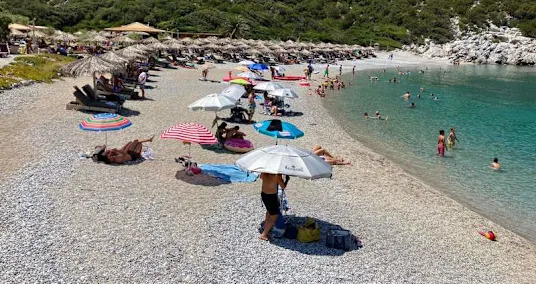
Greece and Cyprus are feeling the effects of the war in the Middle East as the holiday season approaches, with uncertainty over rising costs and economic developments causing concern across the hotel sector.
In Athens, industry representatives are observing a noticeable slowdown in reservations.
Travel agencies and hoteliers say many holidaymakers are hesitating and waiting to see how the situation develops.
Greek Tourism Minister Olga Kefalogianni spoke late last week of the psychological burden caused by the war, but also suggested that holidaymakers may concentrate on destinations considered safe — including Greece, which lies far from the actual crisis region.
Cyprus in contrast is closer to the conflict region and has experienced its effects directly: in early March, an Iranian-made drone struck the British RAF Akrotiri airbase near Limassol, causing minor damage.
The government in Nicosia has launched a package worth €200 million ($230 million) to cushion the economic consequences of the Middle East crisis.
In April, 30% of the wages of employees in hotels and other holiday accommodation will be covered. The government is also planning support for airlines.
Cypriot Tourism Minister Kostas Koumis said that the drop in tourist arrivals from several important markets such as Israel and several Arab states was particularly problematic.


 As reefs vanish, assisted coral fertilization offers hope in the Dominican Republic
- Over 1,800 killed since junta seized power in Burkina Faso, rights group says
- Vote in favor of your Favored kind of pasta
- New heart disease calculator predicts 30-year risk for young adults
- At least 18 Palestinians killed in latest clashes in Gaza
- Are Iraqi militias crossing into Iran to support Iran's war effort?
- ISS astronaut snaps stunning nighttime photo of Florida and Cuba | Space photo of the day for Dec. 29, 2025
- Feeling wonder every day improves our health. Here’s how to do it.
- Cameroon says Russia has confirmed 16 Cameroonian soldiers died in Ukraine