When you buy through links on our articles, Future and its syndication partners may earn a commission.

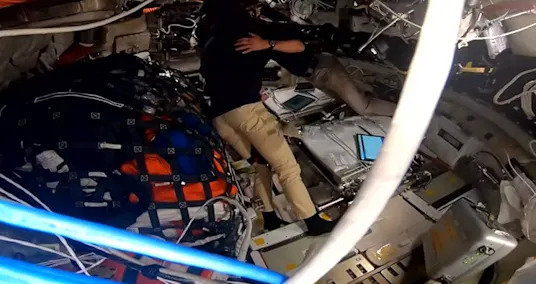
HOUSTON, Tex. — Today (April 6), as NASA's Artemis 2 astronauts had their names etched into history books for becoming the farthest-ever humans from Earth, they took a moment to recognize the milestone by remembering someone no longer with us.
The previous distance record was held by Apollo 13, which traveled 248,655 miles (400,171 kilometers) from Earth at the farthest point of its mission. The Artemis 2 astronauts just surpassed that, marking the occasion with a teary-eyed dedication.
"A number of years ago, we started this journey in our close-knit astronaut family and we lost a loved one," Artemis 2 mission specialist Jeremy Hansen said to mission control. "Her name was Carroll: the spouse of Reid, the mother of Katie and Ellie."

Hansen was referring to Artemis 2 mission commander Reid Wiseman's wife, who tragically died of cancer in 2020. The crewmembers together requested naming a crater they identified on the moon after her.
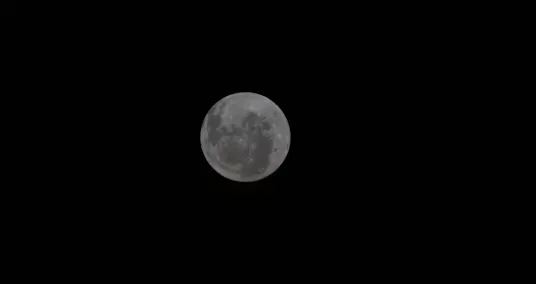
Northwest of the moon's Glushko crater, on the same latitude as the Ohm crater, sits the proposed "Carroll" crater. Hansen called the crater a "bright spot" along the moon's near side that can be seen from Earth. As his crewmate spoke, Wiseman reached over to put a hand on Hansen's shoulder, as each member of the Artemis 2 crew moved into a collective embrace.
The mission's crewmembers chose to name a different crater after their Orion spacecraft, named Integrity.
As the astronauts wiped tears from their eyes, NASA's mission control responded to their transmission: "Integrity and Carroll Crater, loud and clear."

Orion's closest approach to the moon will take place later Monday, bringing the crew within about 4,000 miles (6,440 kilometers) of the lunar surface. That flyby begins at 7:02 p.m. EDT (2302 GMT), and will last a little more than three hours.
During that time, Orion will also reach its farthest distance from Earth, flying at a staggering 252,760 miles (406,778 kilometers) away from our home planet.
The crew's lunar observations are expected to wrap up at 9:20 p.m. EDT (0120 GMT, April 7), at which point, they'll officially be on their way back to Earth.
LATEST POSTS
- 1
 A24's 'Backrooms' trailer shows endless fluorescent-lit spaces and terrifying mannequins melting into the floor
 - 2What’s your chronotype? Knowing whether you’re a night owl or an early bird could help you do better on tests and avoid scams
- 3Israel violated ceasefire with Hezbollah more than 10,000 times, UNIFIL claims
- 4The Solution to Defeating Tarrying: Systems for Expanded Efficiency
- 5Wellness Bits of knowledge Readily available: A Survey of \Following Wellbeing and Progress\ Wellness Wearables



- The Green Transformation: 5 Feasible Living Practices
- The most effective method to Shield Your Gold Ventures: Procedures and Precautionary measures
- Ice Spice's 'Big Guy' SpongeBob song is stuck in everyone's heads again — and TikTok is fueling it
- Artemis II crew take new photo of far side of the moon
- I decided to become a single mother by choice. I wasn't ready to stop dating.
- The moon and sun figure big in the new year's lineup of cosmic wonders
- Governments take targeted action as fuel prices hit retail
- Kenmore East reacts to their best overall delegation award at WNY Model United Nations General Assembly competition
- Verdicts against social media companies carry consequences. But questions linger